
GEO & AEO
Get Cited by AI.
Not Just Ranked by Google.
Generative Engine Optimization (GEO) and Answer Engine Optimization (AEO) determine whether your content appears inside AI-generated answers on ChatGPT, Perplexity, and Google AI Overviews. This hub covers the frameworks, content architectures, and citation systems that put your content in those answers — not just on page one.

QUICK ANSWER
What Are GEO and AEO?
Generative Engine Optimization (GEO) is the practice of structuring content so Large Language Models can understand, extract, and cite it inside AI-generated answers. Answer Engine Optimization (AEO) focuses on winning direct answer slots — featured snippets, voice results, and zero-click AI responses. Together, they form the citation layer of modern search.
The distinction matters because ranking on page one no longer guarantees visibility. When AI models answer a query directly, they cite sources — not positions. GEO and AEO are the disciplines that put your content in those citations, on every AI platform that matters in 2026.
THE CORE DISCIPLINES
Two Frameworks. One Citation Strategy.
GEO and AEO are distinct disciplines with overlapping techniques. Understanding both — and where they connect — is what separates practitioners from theorists.
Core Discipline
Generative Engine Optimization (GEO)
The practice of structuring content so LLMs can decompose, recombine, and cite it inside AI-generated answers across ChatGPT, Perplexity, Google AI Overviews, and Gemini. Entity clarity, information density, and atomic answer blocks are the primary levers.
Emerging Standard
Answer Engine Optimization (AEO)
The discipline of winning direct answer slots — featured snippets, voice assistant responses, and zero-click answer modules. AEO focuses on structured Q&A patterns, FAQPage schema, and concise answer blocks positioned high in the content hierarchy.
Advanced Layer
The Citation Economy
The emerging framework for measuring visibility in AI-first search — where being mentioned and cited by AI models matters more than ranking position. Content that earns citations compounds across every AI platform simultaneously.
FLAGSHIP INTELLIGENCE
Generative Engine Optimization (GEO): The Complete Playbook
The definitive AEO Insider guide to GEO — covering content architecture, entity structuring, atomic answer patterns, and what it takes to be cited inside Google AI Overviews, ChatGPT, and Perplexity. Built for practitioners who need a system, not a theory.

THE GEO & AEO INDEX
Everything in This Category
Frameworks, playbooks, and implementation guides for being cited inside AI-generated answers. Written for practitioners who need to act — not beginners looking for definitions.
-
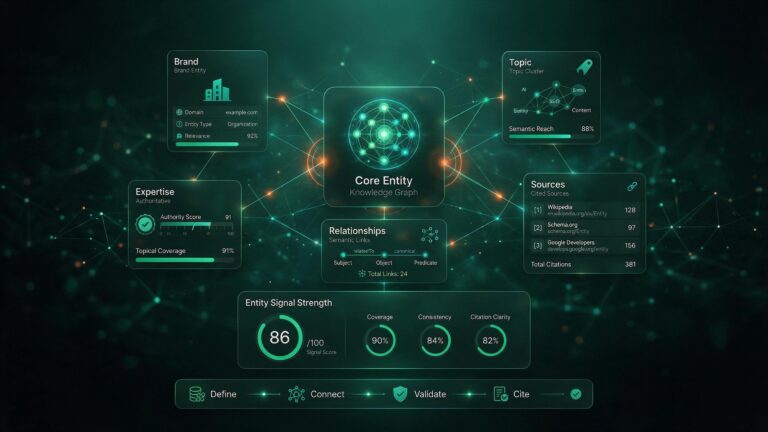
Entity-First Content for GEO and AEO
Quick answer: Entity-first content means writing so every concept a knowledgeable source would mention is actually present — not just the target keyword repeated. AI systems assemble answers from entities and relationships, not word counts, so pages missing expected entities read as thin even when well-written. The fastest way to find gaps…
-
The Citation Economy: Why AI Mentions Are Becoming More Valuable Than Rankings
In AI-first search, being cited inside an answer is worth more than ranking below it. The citation economy is the emerging framework for measuring and winning that visibility — and most practitioners are still ignoring it.
-
What Is Answer Engine Optimization (AEO)? The Complete Guide for 2026
Answer Engine Optimization (AEO) is the practice of structuring content to be cited inside answer engines — including Google AI Overviews and featured snippets. Here is how it works and what to do.
-
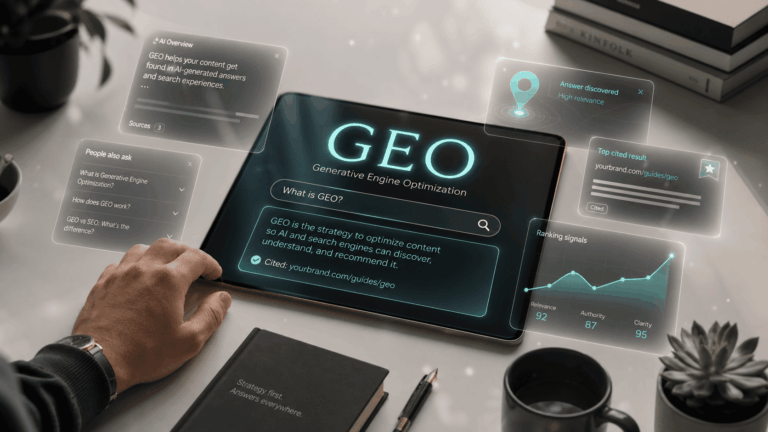
What Is Generative Engine Optimization (GEO)? The Complete Guide for 2026
The complete practitioner guide to Generative Engine Optimization (GEO) in 2026 — what it is, how it differs from SEO and AEO, and the seven content principles that determine whether AI systems cite your content or ignore it.
-
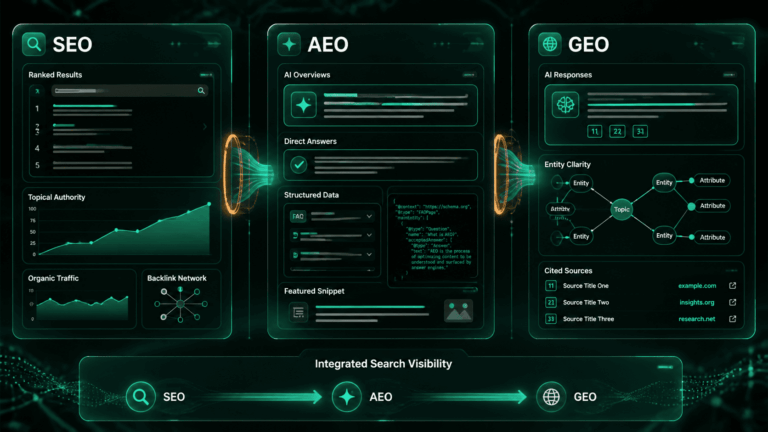
SEO vs AEO vs GEO: The New Search Optimization Stack Explained
Learn how SEO, Answer Engine Optimization (AEO), and Generative Engine Optimization (GEO) work together in 2026 — and what each one means for your content and traffic strategy.

Stay Ahead of AI Search.
Weekly AEO, GEO & AI SEO intelligence for marketers who want their content cited by AI. No fluff.
EXPLORE THE FULL LIBRARY
More From AEO Insider
GEO and AEO don’t operate in isolation. The citation frameworks here connect directly to AI SEO fundamentals, content workflows, and automation systems.
AI SEO
Foundational frameworks for SEO in an AI-first search world
Explore AI SEO →
Workflows
AI content systems for teams and solo operators
Explore Workflows →
Automation
Make, Zapier, scripts, and AI agents at scale
Explore Automation →
Monetization
Affiliate stacks, productized audits, owned-audience revenue
Explore Monetization →
Tools
Vetted comparisons and alternatives for every use case.
Explore Tools →
FREQUENTLY ASKED QUESTIONS